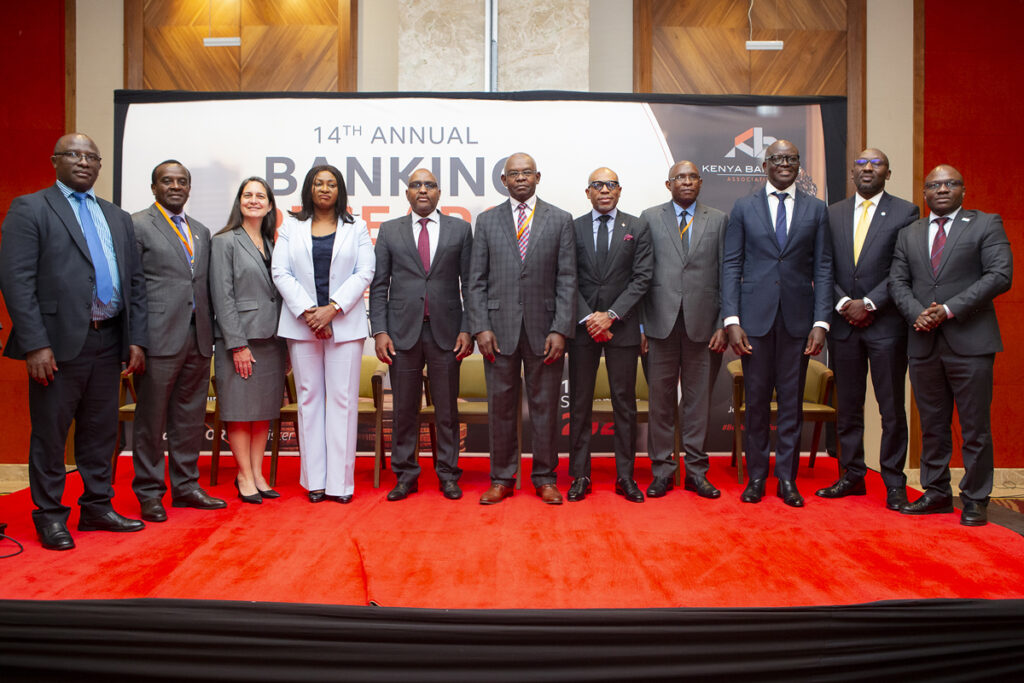
Nairobi, Kenya – September 18, 2025: The Governor of the Central Bank of Kenya (CBK), Dr. Kamau Thugge, has urged commercial banks to swiftly implement the new loan interest rate calculation formula to boost transparency in lending, noting that customers are more likely to choose banks that adopt clear and consistent frameworks in loan pricing.
Speaking at the Kenya Bankers Association (KBA) 14th Annual Banking Research Conference in Nairobi earlier today, Dr. Thugge said the newly introduced Kenya Shilling Overnight Interbank Average (KESONIA) addresses shortcomings of the previous risk-based pricing model by offering a common reference rate for all banks.
“This new framework, which is KESONIA, will be the common reference rate for all variable rate loans except for foreign currency-denominated loans. All other loans will have the base rate as KESONIA. There will be no excuse for banks…once we lower the policy rate, banks should also lower interest rates,” Dr. Thugge said.
His sentiments were echoed by KBA Chairman and KCB Group CEO Paul Russo, who emphasized that the new formula does not amount to interest rate controls. “We want transparency, but we also want to increase lending to the private sector. Risk-based pricing brought transparency, but we also have to transmit monetary policy decisions. I commend the banking industry for working with the regulator to bring this to life,” Mr. Russo said.
KBA CEO, Mr. Raimond Molenje, welcomed the move, noting that the alignment between banks and regulators would strengthen confidence in the financial system. “Transparency and consistency in loan pricing are essential to supporting business growth, especially for MSMEs that drive our economy. By adopting KESONIA, banks not only build customer trust but also ensure that credit flows more effectively to productive sectors of the economy,” said Mr. Molenje.
The two-day conference, themed “Banking and Economic Growth Dynamics: Navigating Risks and Leveraging Opportunities in MSME Financing,” brought together regulators, industry leaders, researchers, and academia to explore ways of strengthening MSME access to credit while balancing emerging risks such as high lending costs, sustainability imperatives, and digital finance integration.
Key sessions highlighted credit guarantee schemes, sector-specific lending dynamics, ESG integration, and innovative methodologies such as gender-disaggregated data dashboards and alternative credit scoring models.
For more information, please contact: research@kba.co.ke
Media Contacts
Christine Onyango
Director, Communication and Public Affairs
Kenya Bankers Association
Email: conyango@kba.co.ke
About Kenya Bankers Association
The Kenya Bankers Association (KBA) is the umbrella body for all commercial banks in Kenya, regulated by the Central Bank of Kenya (CBK). Established on 16th July 1962, KBA represents 46 member institutions with assets exceeding KES 7.7 trillion. The Association’s core mandate is to champion a stable, competitive, and inclusive banking industry by influencing legislation, regulation, and policy to enhance access to affordable credit for individuals, households, and businesses. KBA also drives financial sector development through strategic initiatives such as the launch of Pesalink, the industry’s first peer-to-peer digital payments platform. In partnership with the CBK and other stakeholders, KBA has also spearheaded key projects including the modernization of the National Payments System, the implementation of the Real Time Gross Settlement System (RTGS), and the Kenya Credit Information Sharing Initiative. Guided by its brand statement, One Industry. Transforming Kenya, KBA continues to promote a strong and professional banking sector that advances innovation, fosters financial inclusion, and supports national economic growth. Learn More: www.kba.co.ke.
In Case You Missed It: https://www.youtube.com/live/

